Viking vs All Clad Cookware: Which Set Is Right for You

Affiliate disclosure: Some links on this page are affiliate links. If you buy through them we earn a small commission at no extra cost to you. Recommendations are research-driven; we don't claim personal use of every product reviewed. Product prices and availability are accurate as of the date published and are subject to change. Always check Amazon for current pricing before purchasing. Learn more.

Viking stainless steel cookware sits in a crowded mid-range field, and two of its own sets illustrate the trade-offs well: the Viking 3-Ply Pots and Pans Set, 13 Piece with glass lids and a strainer, and the Viking Culinary 3-Ply Stainless Steel Cookware Set, 10 Piece with metal lids. Same brand, same 3-ply construction, different piece counts and lid materials. The right choice depends on how you cook and what you actually need on the shelf.
Both sets belong to the broader Stainless Steel category where piece count, lid type, and included extras determine everyday value. This comparison breaks down the construction data, reported ownership experience, and which set makes more practical sense for different kitchens.
Quick Verdict
The Viking Culinary 3-Ply Stainless Steel Cookware Set, 10 Piece with metal lids is the stronger choice for most buyers. Metal lids survive high-oven use without the glass-breakage risk, and the 10-piece configuration covers the core cooking tasks without loading your cabinet with pieces you’ll rarely reach for. Owner threads consistently favor the cleaner, lower-maintenance kit.
The 13-piece glass-lid set makes sense if you want built-in straining functionality and prefer monitoring food without lifting a lid. The strainer insert is a genuine utility add for pasta and blanching , owner reports suggest it earns its place for anyone who cooks pasta frequently. The larger set also gives redundancy across sauce pan sizes, which some cooks find useful.
Both sets share the same 3-ply aluminum core bonded between two stainless layers. Heat distribution is comparable on paper. Neither set is nonstick, so both reward the same technique: preheat the pan, use adequate fat, and let the fond release naturally. That shared characteristic matters more than the difference in piece count.
Specs at a Glance
| Spec | Viking 3-Ply 13-Piece (Glass Lids) | Viking Culinary 3-Ply 10-Piece (Metal Lids) | |, |, , , , , , -|, , , , , , , , -| | Construction | 3-ply stainless/aluminum/stainless | 3-ply stainless/aluminum/stainless | | Piece count | 13 | 10 | | Lid material | Tempered glass | Stainless steel | | Included extras | Strainer insert | None listed | | Induction compatible | Yes | Yes | | Oven safe | Yes | Yes | | Dishwasher safe | Yes | Yes | | Price tier | Mid-range | Mid-range |
Viking 3-Ply 13-Piece Cookware Set , Strengths and Trade-offs
The piece count here is the headline. Thirteen pieces across a mid-range set means more sauce pan options, larger stock pot capacity, and the strainer insert that pushes this beyond a standard cookware bundle. Owner reports on the strainer specifically are positive , it integrates cleanly with the stock pot and eliminates a colander for pasta and vegetable blanching.
The 3-ply construction matches what the brand delivers across its stainless line: an aluminum core running the full base and up the sidewalls, bonded between two stainless layers. On paper, this translates to reasonably even heat spread and solid retention. Owner consensus notes the expected stainless learning curve , food will stick if the pan is cold or under-oiled , but the core construction itself draws few complaints.
Glass lids are the trade-off most worth noting. They let you monitor without lifting, which is genuinely useful at low simmer settings. But glass lids are oven-limited compared to metal , most glass lids top out around 350°F, while a stainless lid handles broiler temperatures without concern. Owner forums occasionally report glass lid breakage from thermal shock or impact. For cooks who move pans regularly from stovetop to high-heat oven, that ceiling matters.
The 13-piece count can also work against you if cabinet space is tight. A few owner reviews note that some included pieces , a second small saucepan, for instance , rarely come off the shelf. More pieces isn’t always more utility.
Check current price on Amazon.
Viking Culinary 3-Ply 10-Piece Cookware Set , Strengths and Trade-offs
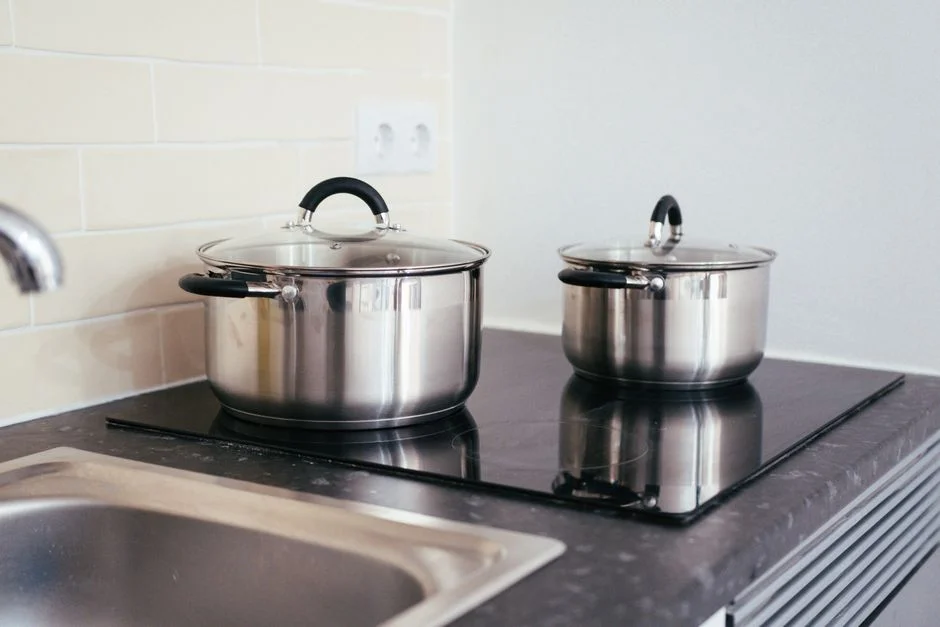
Ten pieces with metal lids is a tighter, more versatile kit. Stainless lids handle any oven temperature, go under a broiler without concern, and don’t carry the breakage risk that glass lids do. For cooks who finish braises or roasts in a high oven, the metal lid removes a constraint that the glass-lid set imposes.
The core construction is the same 3-ply stainless-aluminum-stainless build. Manufacturer data puts this set as fully induction compatible, oven safe, and dishwasher safe , the same functional spec sheet as its sibling. The difference is what the set excludes: no strainer insert, fewer redundant pieces. Owner reports on this set note its practicality as a day-to-day kit that doesn’t overcrowd storage.
Stainless steel sets at this price tier benefit from straightforward maintenance. Dishwasher compatibility is genuine, though hand washing preserves the finish longer , a consistent note across owner threads for both Viking sets. Bar Keepers Friend is the consensus recommendation for stainless discoloration and heat tinting, which both sets will develop with regular high-heat cooking.
The metal lid design does trade away the visibility that glass provides. Owners who simmer delicate sauces or reduce stocks often prefer to see what’s happening without lifting a lid. If that matters in your cooking workflow, it’s a real trade-off, not a trivial one.
Check current price on Amazon.
Viking 3-Ply Copper Exterior 10-Piece Cookware Set , Strengths and Trade-offs
The Viking 3-Ply Pots and Pans Set, 10 Piece Copper Kitchen Cookware is a different animal from the two stainless sets above. The hammered copper exterior is a visual choice first , it doesn’t change the thermal performance meaningfully because the functional cooking surface is still stainless steel, and the heat distribution comes from the aluminum core. Copper exterior on a 3-ply pan is an aesthetic statement, not a materials advantage.
Owner consensus on copper-exterior cookware generally points to one consistent issue: maintenance. The hammered copper exterior requires periodic polishing to prevent tarnishing and oxidation. Owners who purchase this set for a kitchen with copper fixtures or specific aesthetic goals report satisfaction. Those who expected a performance upgrade over standard stainless typically don’t find one.
The 10-piece count and glass lids on this set put it closer to the 13-piece glass-lid set in terms of format. At a higher price point than the standard stainless options, the premium is paid almost entirely for the exterior finish. For cooks who prioritize function over appearance, owner data doesn’t support choosing this set over the standard stainless versions at a lower price tier.
Check current price on Amazon.
Viking 3-Ply Stainless Steel Saucepan, 1.5 Quart , Strengths and Trade-offs
The Viking 3-Ply Stainless Steel Sauce Pan with Glass Lid, 1.5 Quart is a single-piece purchase for cooks who need to fill a specific gap rather than replace an entire kit. A 1.5-quart saucepan handles individual servings, melting butter, warming sauces, and small-batch reductions. Owner reports consistently place this size as the most-reached-for pan in the saucepan category for one- and two-person households.
The 3-ply construction here matches the full sets , same aluminum core, same stainless cooking surface. The glass lid provides visual monitoring at the small scale where keeping an eye on a sauce without lifting matters most. Manufacturer data confirms induction compatibility, which makes this a solid standalone addition to an induction kitchen already running Viking or another stainless line.
The limitation is capacity. At 1.5 quarts, batch cooking isn’t on the table. Owner feedback notes that cooks who regularly make soups or larger sauce volumes quickly outgrow this size. As a supplementary piece for an existing kit, it performs its role well. As the primary saucepan for a household that cooks in volume, the size becomes a constraint quickly.
Check current price on Amazon.
Viking 3-Ply Stainless Steel Pasta Pot, 8 Quart Multipot , Strengths and Trade-offs
The Viking 3-Ply Stainless Steel Pasta Pot with Lid, 8 Quart is a purpose-built piece for high-volume cooking. Eight quarts handles full pasta batches, stock, corn, and large-batch blanching. The included pasta insert is the functional core of the set , it lifts directly out of the boiling water so draining is built into the workflow rather than requiring a separate colander.
The 3-ply construction applies the same even-heat logic to a larger vessel. On paper, the aluminum core mitigates the hot-spotting that single-layer stainless stock pots are prone to at the base. Owner reports on large 3-ply pots generally confirm that the base heats more evenly than single-ply alternatives, which matters for stock work where scorching at the bottom is a real risk.
Size is the obvious trade-off. An 8-quart multipot requires adequate burner size and storage space. Owner reviews note that the pot itself is heavy when full , as expected at this capacity , and that the pasta insert adds meaningful weight to the lift-and-drain step. For households that cook pasta weekly for four or more people, or that make stock in volume, the capacity earns its place. For smaller households, a 6-quart pot is often the more practical size.
Check current price on Amazon.
Which Should You Pick
The Viking Culinary 3-Ply 10-Piece set with metal lids is the right call for most households starting or replacing a stainless kit. The metal lids remove the oven-temperature ceiling, the 10-piece count covers everyday cooking without cluttering storage, and the construction matches the larger set on every performance metric that matters. Owner consensus points here as the practical default.
Choose the 13-piece glass-lid set if the strainer insert fits your cooking workflow and you don’t regularly finish pans above 350°F in the oven. Pasta-heavy households and cooks who blanch vegetables frequently report the strainer earning its space. The glass lids add monitoring convenience at the cost of oven flexibility.
The copper exterior set belongs in kitchens where the visual matches an existing design scheme. The 1.5-quart saucepan is a sound gap-filler for an existing kit. The 8-quart pasta pot is worth adding as a standalone piece for high-volume cooking, regardless of which base set you choose. For a deeper look at how Viking fits within the broader stainless landscape, the stainless steel cookware hub covers the full category.
Frequently Asked Questions
Is 3-ply stainless steel construction the same across all Viking sets?
Manufacturer data describes the same stainless-aluminum-stainless 3-ply construction across Viking’s stainless line, including the 13-piece and 10-piece sets compared here. The aluminum core runs through the full base and sidewalls in both configurations. Performance differences between the sets come from piece count and lid material, not from construction variation.
What is the practical difference between glass and metal lids for stainless cookware?
Glass lids let you monitor food without lifting, which is useful at low simmer temperatures. Metal lids handle any oven temperature without a ceiling and carry no breakage risk from impact or thermal shock. Owner forums consistently note that cooks who finish dishes in a high oven find metal lids more practical, while glass appeals to those who do more stovetop simmering.
Do Viking stainless sets work on induction cooktops?
Both the 13-piece and 10-piece Viking stainless sets are listed as induction compatible in manufacturer specifications. The stainless exterior layer is magnetic, which is the requirement for induction use. Owner reports on induction performance are generally positive, noting that the 3-ply construction heats responsively compared to thinner single-ply stainless alternatives.
Is the Viking Culinary 10-piece set a good option if I already own some stainless pieces?
If you already have a solid saucepan or stockpot, a full 10-piece set may duplicate what you own. Owner threads suggest evaluating whether you need the complete set or whether adding individual pieces , like the Viking 3-Ply Stainless Steel Sauce Pan, 1.5 Quart or the 8-quart pasta pot , covers the actual gap more efficiently.
How do I prevent food from sticking to Viking stainless steel pans?
Stainless steel requires technique rather than a nonstick coating. Owner consensus and general stainless best practice both point to the same approach: preheat the pan until a water droplet beads and rolls (the Leidenfrost point), add fat, then add food. Protein will release naturally once a crust forms , forcing it early causes sticking. Sufficient fat and patience account for most sticking complaints reported by new stainless owners.
Where to Buy
Viking 3-Ply Pots and Pans Set, 13 Piece Stainless Steel Cookware, Glass Lids, Strainer, SilverSee Viking 3-Ply Pots and Pans Set, 13 Pi… on Amazon